Bedding Materials
How Organic Cotton Crib Bedding Helps Manage Moisture and Comfort
A crib’s sleep surface has a quiet but important job: feel comfortable against a baby’s skin while helping protect the mattress from everyday dampness. Organic cotton can contribute to that balance, but no single fiber or label tells the whole story. The construction of each layer—and the care it receives—matters just as much.
A small spill, a damp diaper, perspiration or a bit of drool can turn a crib mattress pad into a practical piece of bedding engineering. Its purpose is not simply to add softness. A well-designed pad can provide a textile surface, help manage moisture and limit liquid from reaching the mattress beneath it. How it performs depends on the materials working together.
One common construction pairs cotton flannel on top with a thin waterproof membrane in the middle and cotton muslin underneath. Each layer serves a different role. The top fabric makes contact with the sleep environment; the membrane acts as a barrier; the backing contributes structure and covers the underside. Understanding the layers separately makes claims about “organic,” “breathable” or “waterproof” easier to evaluate.
It also helps families ask a more useful question than whether a product is natural or synthetic: What is each component made of, what does it do, how is the item maintained, and what does a certification actually verify?
The surface layer: cotton in contact with the sleep space
Cotton is a familiar bedding fiber because it can be woven or knitted into fabrics with different textures and weights. In a crib pad, the top layer may be cotton flannel, a brushed fabric with a soft hand, or another cotton textile chosen for its feel and construction. The surface affects the immediate experience of the pad, but it does not by itself determine whether the complete product manages moisture well.
Cotton can take up moisture from its surroundings. That absorption may help keep a small amount of dampness from remaining as a bead on the surface, but absorbed moisture still has to go somewhere. It may spread through the fabric, move toward other layers, or remain until the bedding dries. A cotton layer should therefore not be treated as waterproof or as a substitute for laundering after it becomes wet.
Fabric weight, weave, finishing treatments and the pad’s overall assembly all influence how a textile feels and behaves. A soft fabric can still dry slowly if it becomes saturated or if air circulation is limited. Conversely, a thin fabric may feel light but offer less cushioning. There is no single cotton specification that guarantees a particular degree of comfort, absorbency or drying time in every crib environment.
“Organic cotton” describes the agricultural and processing standards associated with the fiber, depending on the claim and any certification. It does not automatically mean that the finished fabric is more absorbent, softer, waterproof or safer in every possible use. Those are separate properties, shaped by manufacturing and product design.
The middle layer: a barrier with a specific job
In a waterproof crib mattress pad, a thin membrane is often placed between textile layers. Its central function is to reduce the passage of liquid through the pad to the mattress. The membrane can be made from different materials, and the available product description may or may not name the exact material. When it does not, a family should avoid assuming what the barrier contains based only on the words “organic cotton” on the packaging.
A membrane changes the way a multi-layer fabric handles water. The cotton surface may take up moisture, while the barrier beneath it limits liquid from travelling farther. This can protect the mattress during routine accidents, but it does not make the entire pad impervious to every leak. Liquid can escape at seams, edges or around a poor fit, and a wet surface still needs prompt changing and cleaning.
Waterproofing and breathability are sometimes presented as if they were simple opposites. In practice, they describe different aspects of a material’s behavior. A barrier may limit liquid water while allowing some water vapor to pass, depending on its composition and design. The word “breathable,” on its own, does not specify a test method, rate of vapor movement or performance under real sleeping conditions. Consumers who need technical detail can look for a named material, test information or a clear explanation from the manufacturer.
Construction matters beyond the membrane itself. How the layer is bonded or assembled, the integrity of seams, the shape of the pad and the fit on the mattress all influence practical protection. Repeated washing, high heat or care that conflicts with the label may affect materials over time. A waterproof claim should therefore be read as a description of intended function, not as a promise that the pad will prevent every possible wetting event indefinitely.
The backing layer and the whole-pad effect
A cotton backing, such as muslin, can cover the underside of a pad and help complete its layered construction. It may help hold the assembly together or provide a textile finish beneath the barrier. But the backing is not necessarily the part responsible for waterproofing; in the common three-layer design, that role belongs to the membrane.
Looking at only the top fabric can obscure how the pad actually works. The complete item is a system: surface textile, barrier, backing, seams and the means of securing the pad to the mattress. If an edge curls or the pad shifts, its performance in everyday use may differ from what its material list suggests. A fitted design and secure elastic can help a pad stay in place, but the dimensions should still match the intended mattress.
Families can examine the product’s construction in a straightforward way by reading the full material description, not just a headline. Useful details include the fiber content of each textile layer, whether a waterproof membrane is present, how the pad is fitted, and which parts can be washed. If the membrane is not identified, that is a limit in the information available—not proof for or against a particular material.
Moisture management is not the same as temperature control
Sleep comfort is often discussed in terms of cooling, but moisture handling and temperature regulation are related rather than interchangeable. A fabric may absorb moisture without making the sleep surface feel cool. A barrier may protect a mattress while also changing how heat and water vapor move through the layers. The result depends on the materials, thickness, construction, room conditions, clothing and bedding used together.
Cotton’s familiar feel can make it a practical surface textile, but “cotton” alone cannot predict whether a baby will sleep hot or cool. Nor does an organic claim provide a temperature-performance measurement. Product descriptions that use broad words such as “breathable” or “temperature regulating” should be interpreted carefully unless they explain the construction or provide test details.
For comfort, the most dependable approach is to consider the sleep space as a whole and follow current safe-sleep guidance from recognized public-health authorities. A mattress pad is a bedding accessory, not a solution for overheating or a reason to add loose items to a crib. The pad should fit securely and be used according to its instructions, with the crib arranged in line with applicable infant-sleep recommendations.
What “organic” can—and cannot—tell you
The word “organic” can refer to the way an agricultural fiber is grown, or to a certified chain of processing and manufacturing. The exact meaning depends on the claim, the applicable scheme and the scope of the certification. A cotton component may be certified while other parts of a finished pad—such as a waterproof membrane, elastic or thread—are made from different materials. The label should be read in context.
Some certifications assess production practices, chemical restrictions, traceability or processing requirements. They can provide useful, independently verified information within a defined scope. They do not automatically establish that a product is waterproof, machine washable, more absorbent, more comfortable or suitable for every child. Nor should one certification be treated as evidence for claims outside the standard it covers.
When a product carries a certification, check the name of the standard and what the certificate applies to. Does it cover the cotton fiber, the finished textile, or the finished product? Is the claim supported by a current certificate or a clear certification reference? If a manufacturer uses a term such as “non-toxic” or “chemical-free,” look for precise explanations rather than assuming that the phrase has a single universal definition.
Certifications are most useful as one part of a broader materials review. A clear list of components, care instructions and product dimensions can help answer practical questions that a logo cannot. Transparency is valuable; it is not a substitute for considering performance, maintenance and fit.
Care instructions are part of performance
A pad’s ability to keep doing its job depends partly on how it is cared for. Washing can remove soils and refresh the textile surface, but the correct method varies by construction. Some products can be machine washed and dried; others require a gentle cycle, limited agitation, lower temperatures or special handling to protect the waterproof layer. The manufacturer’s care label is more reliable than a general rule based on fiber type alone.
After a spill, change damp bedding promptly and follow the product instructions. If a pad is washed, ensure it is thoroughly dry before putting it back into use. Retained dampness can make bedding unpleasant and may contribute to odor or material deterioration. Avoid bleach, fabric softener or high heat unless the care guidance explicitly allows them; these can affect fabrics or coatings in some constructions.
Routine inspection is useful. Check whether the elastic remains secure, seams are intact and the barrier shows signs of damage, peeling or unusual stiffness. A pad with a compromised membrane may no longer offer the intended level of liquid protection. Careful washing cannot restore a worn or damaged barrier, so follow any replacement advice provided by the manufacturer.
A practical materials check for families
When comparing organic crib bedding or crib mattress pads, a short, evidence-minded checklist can turn vague claims into concrete questions. The aim is not to identify a universally perfect material, but to understand what the product is made to do and how its construction fits a family’s needs.
- Read the full fiber content. Look for the stated material of the top fabric, backing, fill, elastic and any other listed component. “Organic cotton” may describe only one part of the item.
- Identify the moisture barrier. Check whether the product contains a waterproof membrane and whether its material is disclosed. Do not infer membrane composition from the cotton cover.
- Understand the construction. Note how the layers are assembled, whether the pad is fitted or secured with straps, and how it is intended to sit on the mattress.
- Check dimensions and fit. Confirm that the product is designed for the relevant mattress size and follows the maker’s fitting instructions. A pad that shifts or bunches may not perform as intended.
- Read the care label before purchase. Consider whether the washing and drying requirements are practical for the household, especially if frequent cleaning is expected.
- Verify certification scope. Find out which material or stage of production is certified and what the named standard addresses.
- Separate verified facts from broad claims. “Organic,” “breathable,” “waterproof” and “hypoallergenic” describe different ideas. Ask for specific supporting information when the wording is unclear.
This kind of review is especially useful when product descriptions are brief. It helps families compare like with like: a fitted waterproof pad should be evaluated not only by its cotton surface, but also by its barrier, fit, durability and care needs.
An example of a layered crib surface
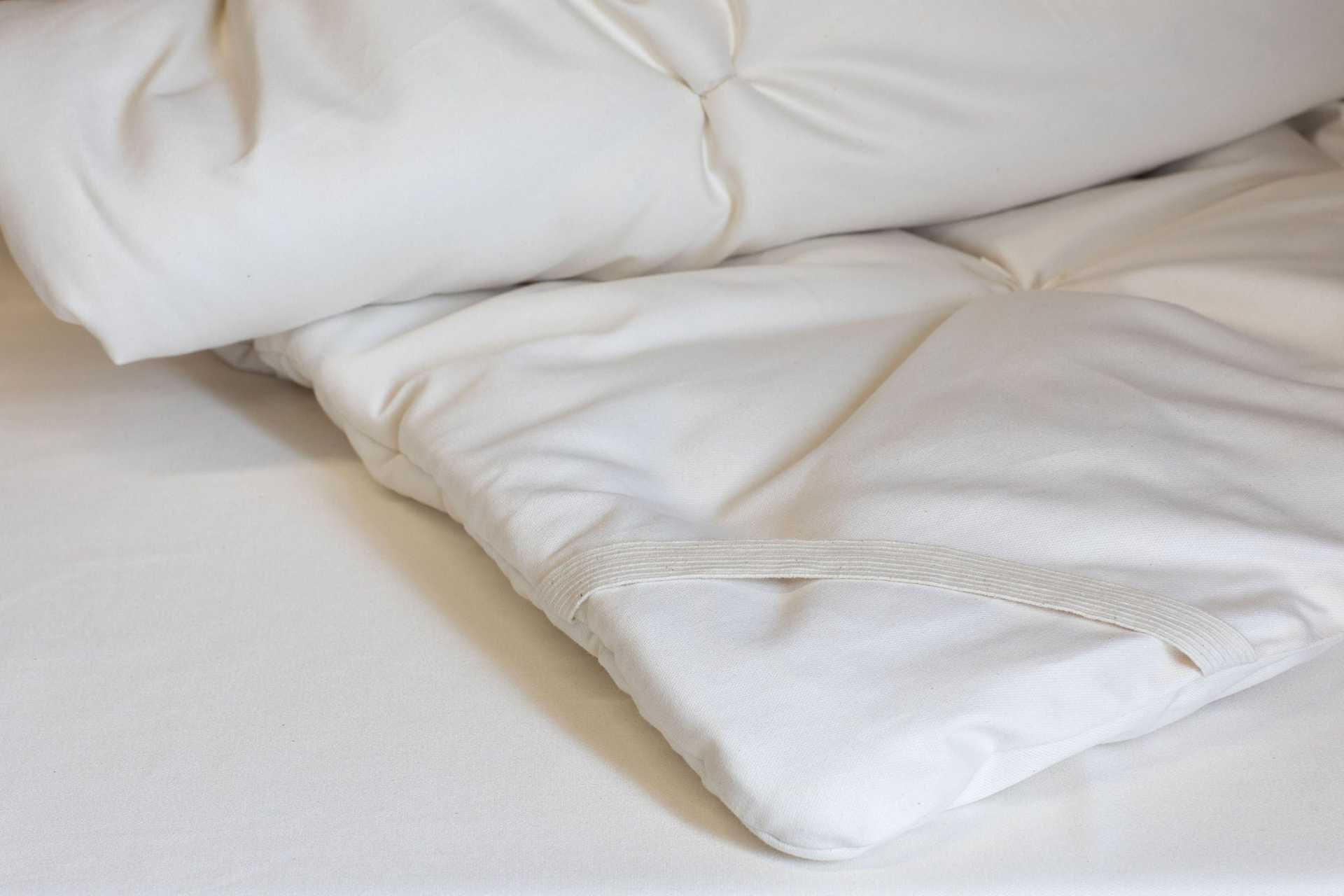
A product such as the Naturepedic Waterproof Organic Cotton Crib Mattress Pad illustrates how a cotton surface and a waterproof layer can be combined. Its description identifies organic cotton flannel on top, organic cotton muslin underneath and a thin waterproof inner layer between them. It also states that the fitted design has elastic around the edge and lists care instructions for machine washing and drying.
Those stated details make the construction easier to understand: the cotton textiles form the outer layers, while the inner layer is intended to block liquid. The description does not, in the information provided here, identify the precise material of the waterproof membrane. That distinction is worth preserving. Knowing a product has a waterproof layer is not the same as knowing its composition, and a cotton exterior does not make every part of the pad cotton.
The example also demonstrates why care information belongs in a materials discussion. A product’s instructions indicate how its maker expects the item to be cleaned, but those instructions should be followed as written rather than generalized to all organic cotton bedding. Similar-looking pads can have different barriers and construction methods.
Common misunderstandings, clarified
“Organic means waterproof.”
No. Organic describes a standard or claim related to materials or production. Waterproof performance comes from the product’s construction, commonly a barrier layer, and should be stated separately.
“Cotton absorbs moisture, so the mattress is protected.”
Absorption and protection are different functions. Cotton can take up moisture, but a barrier is generally needed to limit liquid from passing through to the mattress.
“Breathable means cool in every room.”
Not necessarily. Breathability depends on the materials and test conditions, while how warm a sleep surface feels depends on the entire sleep environment. Broad wording does not give a precise temperature result.
“A certification proves every safety and performance claim.”
A certification applies to a defined standard and scope. It may verify certain materials or production requirements without evaluating every aspect of comfort, waterproofing, durability or use.
“If the top looks clean, the pad is dry.”
Moisture may remain in or between layers even when the surface appears dry. Follow care guidance, allow the pad to dry fully after washing and replace it if its construction is damaged.
The bottom line
Organic cotton crib bedding can provide a familiar textile surface, while a separate waterproof membrane can help prevent liquid from reaching the mattress. The two functions work in tandem, but they are not interchangeable: cotton contributes the outer fabric, and the barrier supplies the principal moisture-blocking role. Backing, seams, fit and laundering complete the picture.
For families assessing crib mattress pads, the most dependable materials check is also the simplest: identify every layer, understand what each is meant to do, verify what a certification covers, and follow the product’s care and fitting instructions. Organic can be a meaningful description of sourcing or processing, but it is not a shortcut for judging every feature. Clear construction details—and a careful reading of what is and is not documented—make for a more informed choice.