Materials guide
How to Read Organic Mattress Layers: Latex, Wool, and Cotton Explained
A mattress label can name natural materials without telling you how they work together. To understand what a bed may feel like, look past the headline and follow the layers: what sits on top, what supports the body, how thick each component is, and which parts are covered by a certification.
Published November 4, 2026
An organic mattress is not a single material. It is a construction: a set of layers assembled to support weight, cushion pressure, manage warmth and moisture, and hold their shape over time. Latex, wool, and cotton often appear together in natural latex organic mattresses, but their names alone do not reveal the mattress’s feel or composition. Position, thickness, density, processing, and the way components are joined all matter.
Think of a mattress as a small materials system. The core may provide most of the lift and resilience. A comfort layer can soften the first impression and distribute pressure. Wool may sit near the surface as quilted batting or form part of a barrier layer. Cotton may make up the fabric encasement. Those roles can overlap, but they are not interchangeable. Reading a construction description closely helps distinguish a genuinely layered design from a broad marketing claim.
This guide explains what latex, wool, and cotton commonly do, how to interpret layer details, and what certifications can—and cannot—tell you. The aim is not to identify one universally best mattress. It is to make the language of mattress construction easier to read.
Start with the layer order
When a manufacturer lists materials, first ask where each one sits. “Latex, wool, and organic cotton” is an inventory, not a construction map. The same ingredients arranged differently can produce a different surface feel and performance. A latex slab under wool quilting, for instance, is not the same arrangement as a thin latex comfort layer placed above a thicker support core.
Read descriptions from the outside inward, then from the top down. The outer cover is the fabric you touch. Beneath it may be batting, a comfort layer, one or more support layers, and—depending on the design—a base or foundation. Some mattress descriptions use “core” to mean the principal load-bearing material; others use the word more loosely. If the sequence is unclear, look for a layer diagram or a written breakdown that states the position and thickness of each component.
- Cover: The fabric casing around the mattress, often cotton or a cotton blend.
- Quilting or surface layer: A relatively thin layer sewn or quilted into the cover, sometimes including wool.
- Comfort layer: Material near the top that influences initial cushioning and pressure distribution.
- Support core: The thicker structural section that bears much of the sleeper’s weight and affects the mattress’s overall response.
- Barrier or fire-protection component: A layer or material used as part of a product’s fire-safety design; its exact composition should be disclosed or explained.
These are useful categories, not universal rules. A material may perform more than one function, and a mattress may combine functions within one component. The important question is whether a description makes the arrangement understandable. If it names materials but gives no order, thickness, or component details, the label provides only a partial picture.
Latex: the responsive support layer
Latex foam is made by processing latex into a resilient foam. In a mattress, it may form a thin comfort layer, a thicker support layer, or nearly the entire core. Its springy response is one reason it feels different from slower-recovering foams: when pressure shifts, latex tends to respond promptly rather than holding a deep impression for as long. How pronounced that quality feels depends on the formulation, firmness, thickness, and the layers around it.
Latex thickness is a practical clue, but not a complete measure of comfort. A thicker soft layer may allow more initial cushioning; a firmer layer beneath it can limit how far the sleeper sinks. Several layers with different firmness levels can create a more adjustable construction. Conversely, a mattress described simply as “latex” may not make clear whether the latex is the whole core, one part of a mixed-material build, or a relatively thin comfort component.
Two common process names are Dunlop and Talalay. They refer to different manufacturing processes, not a simple ranking from inferior to superior. Each process can yield latex with a range of properties. A useful specification identifies the type, the layer’s thickness and firmness, and whether the latex is natural, synthetic, or a blend. “Natural latex” does not automatically mean that every part of the mattress is natural or that the finished product is certified organic.
Firmness numbers may also appear in descriptions. For latex, one measure often cited is ILD, short for indentation load deflection, which describes the force needed to compress a sample by a specified amount under a defined test. It can help compare materials measured in similar ways, but it is not a complete prediction of how an entire mattress will feel. Layer thickness, body weight, position, cover tension, and the support surface underneath all affect the experience.
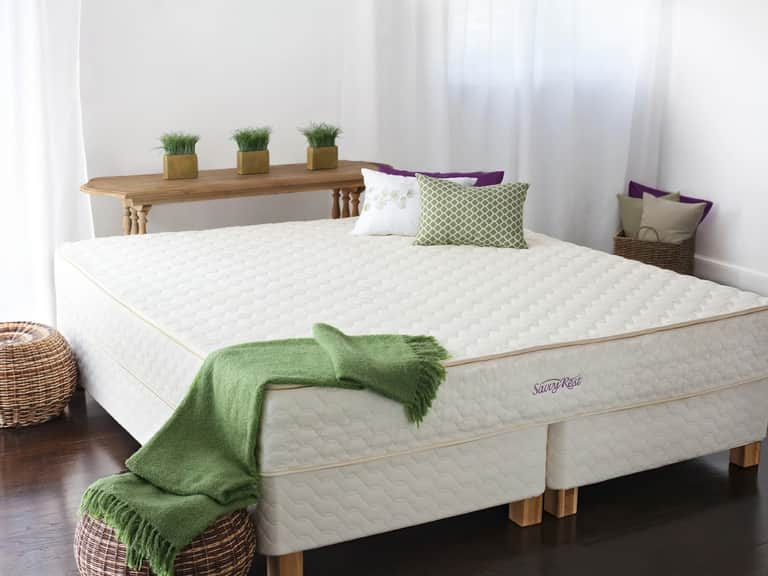
A concrete example of a clearly described layered design is the Savvy Rest Serenity Latex Mattress, which is described as having three customizable latex layers, organic wool batting, and an organic cotton casing. Its construction information identifies layer options and allows different arrangements for some sizes. That example is useful as a way to read a specification—not as evidence that one configuration will suit every sleeper.
Wool: cushioning, warmth, and moisture handling
Wool most often appears in a mattress as batting quilted into the cover or as a layer surrounding another material. Its fibers can compress and recover to a degree, adding a softer surface feel. Wool can also absorb moisture vapor and release it as conditions change, which is why descriptions often connect it with a drier-feeling sleep surface. That does not make a wool mattress waterproof, nor does it mean that a thick wool layer will guarantee a particular temperature for every sleeper.
Its position matters. A modest amount of wool quilted close to the surface may slightly alter the feel of the cover and provide a cushioned transition to the layer below. A thicker wool wrap may contribute more noticeably to the mattress’s surface and overall insulation. Wool also appears in some mattress constructions as part of a fire-barrier strategy. In that role, it has a safety function as well as a material identity, and it should not be assumed to be the only component involved in meeting applicable requirements.
Look for the exact wording used to describe wool. “Wool,” “organic wool,” and “wool fire barrier” are not equivalent statements. Ask whether the wool is in the quilted cover, inside a separate layer, or used as a barrier; how much is present; and what certification, if any, applies to it. Also check care instructions. A mattress with integrated wool layers is not typically something to machine-wash, and cleaning methods can vary by construction.
Wool can affect a mattress’s feel, but it does not determine firmness by itself. A soft wool quilt over a firm latex core may create a surface that feels gently cushioned while retaining substantial support beneath it. A different latex firmness or a different quilting pattern can alter that first impression. In other words, a materials list is only the opening line; the full arrangement tells the story.
Cotton: the cover and the details around it
Cotton commonly serves as the mattress’s outer fabric, the textile that encloses the layers and may be quilted with wool or another fill. It can also appear in internal fabric components. A cotton cover may feel crisp, smooth, or soft depending on its weave, weight, finishing, and construction. The word “cotton” alone does not establish how breathable a particular cover will feel or how easily it can be cleaned.
When a mattress description says “organic cotton,” find out which component that claim covers. It may refer to the outer fabric, a specific textile, or a defined portion of the product—not necessarily every material inside the mattress. A removable cover is not automatically washable, and a washable cover is not automatically made from certified organic cotton. The manufacturer’s care directions and certification scope are separate pieces of information worth checking.
Construction details can affect everyday use. A tightly fitted casing, quilting pattern, zipper, or stitched seam may influence how the mattress layers sit together. A zippered cover can make inspection or assembly easier in some designs, but it does not mean that the casing should be removed or washed. Follow the product’s care instructions; moisture, heat, and aggressive cleaning can damage materials or affect the way a mattress is assembled.
How combinations shape the feel
In a latex, wool, and cotton mattress, each material contributes through its role in the stack. Latex typically provides a large share of resilient support and cushioning. Wool may add a quilted buffer, help manage moisture vapor, or serve as part of a fire-protection design. Cotton commonly forms the cover or another textile layer. The mattress’s feel emerges from their combination, not from any single ingredient in isolation.
Consider two descriptions that both list the same three materials. One may have a thick latex core beneath a light wool quilt. Another may use a thinner latex layer with a substantial wool wrap. Even before considering firmness, these designs can differ in how much cushioning is felt at the surface, how directly the body meets the latex, and how the mattress responds as weight settles into it.
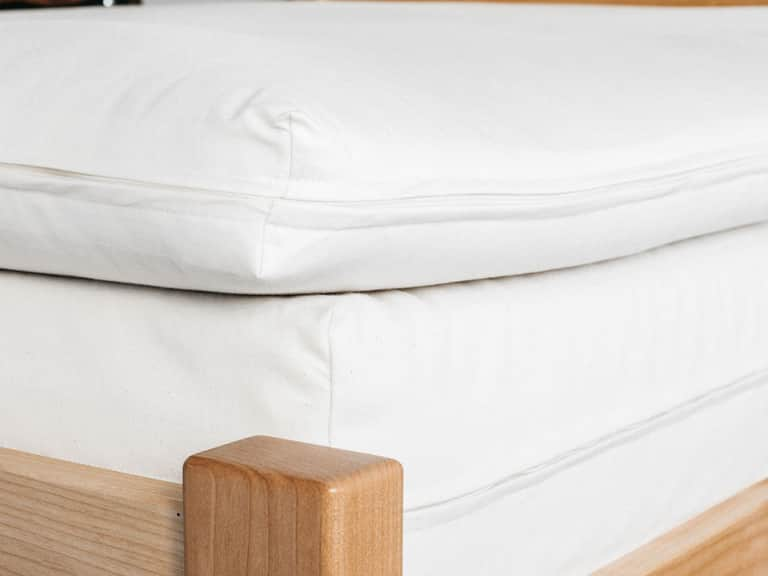
Layered toppers make the same principle easier to see. The Natural Wool & Latex Mattress Topper, for example, is described as having a two-inch Dunlop latex core, wool around it, and an organic cotton outer fabric. The overall stated depth is three inches. It illustrates how a construction can place the materials in distinct roles: latex as the central foam layer, wool as surrounding material, and cotton as the casing. It is a topper rather than a full mattress, so its description should not be read as a substitute for a complete mattress specification.
For sleep feel, pay attention to the details that connect layers to the body. A soft top layer may ease the initial contact, while a firmer layer beneath can limit deeper compression. A high or low total mattress profile does not, by itself, tell you whether a bed will feel firm. Nor does the term “support” describe one sensation: it may refer to the mattress’s ability to hold the body up, while “pressure relief” refers to how load is distributed across contact areas. Both depend on the person and the full construction.
Certifications: read the scope, not just the badge
Certifications can help verify specific claims, but they do not all certify the same thing. Some standards concern the organic status of agricultural inputs or materials; others address processing, emissions, or product safety. A certification associated with cotton does not automatically apply to latex, wool, adhesives, thread, or the finished mattress as a whole. The certificate’s scope and the named components matter.
Look for the exact certification name, the component it covers, and whether the claim applies to a raw material, a processing stage, or the finished product. If an organic label appears, check whether the manufacturer identifies the relevant standard and certifying organization. If the description says only “certified,” ask what was certified and against which criteria. Broad wording should not be treated as proof that every component is organic or free of every substance a consumer might wish to avoid.
Certifications are most useful as one part of a larger evidence trail. A detailed layer list, clear material origins where available, care instructions, and transparent explanations of fire-safety components can all help a reader understand a mattress. No single badge explains comfort, durability, or suitability for a particular body and sleep position.
A practical checklist for reading mattress descriptions
Before drawing conclusions from a product page or label, use a few consistent questions. They help turn attractive material names into information you can compare across designs.
- What is the layer order? Can you tell what sits nearest the sleeper and what forms the main support core?
- How thick is each material? Look for measurements by layer, not only total mattress height.
- What kind of latex is specified? Check for Dunlop or Talalay, natural or blended content, and firmness information where available.
- Where is the wool used? Is it quilted into the cover, wrapped around latex, or described as a fire barrier?
- What does “organic cotton” refer to? Confirm whether the claim covers the outer fabric or another particular component.
- Which certifications apply to which components? A material-level certification is not necessarily a finished-product certification.
- Can you customize the layers? If so, find out whether firmness choices change the materials, layer positions, or both.
- What are the care and support requirements? Check cleaning guidance, the recommended base, warranty terms, and any setup instructions.
If a key answer is missing, that does not prove a mattress is poorly made. It does mean you have less information to compare. A clear specification makes it easier to distinguish material composition from performance language and to decide what follow-up questions are worth asking.
Common misunderstandings to avoid
“Natural” does not mean “organic.” Natural describes a broad source or material claim; organic status is tied to defined standards and documentation. Ask for the precise wording and scope.
“Organic mattress” does not necessarily mean every component is organic. A product may combine certified materials with other components. The specific claim should identify what is covered.
More layers do not automatically mean better support. Layer count is a construction detail, not a quality score. Thickness, firmness, material properties, and the relationship among layers are more informative.
One material cannot predict the whole sleep experience. Latex may be resilient, wool may add cushioning and manage moisture vapor, and cotton may form a fabric casing, but the final feel depends on their arrangement and on the sleeper.
A certification is not a comfort rating. It may verify a particular material or process, but it cannot determine whether a mattress’s firmness, height, or pressure response will suit an individual.
The short version
Reading organic mattress layers means looking beyond a list of appealing materials. Start with the order and thickness of the layers. Identify whether latex is the core or a comfort component, where wool sits and what function it serves, and whether cotton refers to the cover or another textile. Then check firmness information, care instructions, and the exact scope of any certification.
Latex, wool, and cotton can work together in a thoughtfully specified mattress, but their names are only a starting point. A transparent construction description—one that explains the materials, their positions, and the standards behind its claims—offers a more reliable basis for understanding how a mattress is built. The clearest label is not necessarily the one with the most impressive vocabulary. It is the one that lets you see what is actually there.