Materials & sleep science
What a Latex Mattress Topper Adds to an Organic Mattress
A latex topper can change the way an organic mattress feels without rewriting what is inside it. The difference may be a little more cushioning, a firmer surface, or a livelier response—but the result depends on the topper, the mattress beneath it, and the person lying on top.
A mattress is not a single sensation. It is a stack of materials responding together: the cover, comfort layers, support core, bed frame and, sometimes, an added topper. Change one layer and the entire sleep surface may feel different. That is the simple premise behind a latex mattress topper—and the reason the same topper can feel plush on one bed and unexpectedly firm on another.
For people who already sleep on an organic mattress, a topper can offer a way to adjust comfort while keeping the mattress’s underlying construction in place. It does not turn every mattress into a different model, nor does it repair every source of discomfort. Instead, it adds a new layer between the sleeper and the mattress. Its thickness, firmness, latex composition and cover all influence what that layer contributes.
The word “natural” can make the conversation sound more straightforward than it is. Latex can come from rubber-tree sap, be produced synthetically, or combine natural and synthetic materials. Organic claims also depend on the specific material and the scope of a certification. A useful assessment starts with construction and evidence, not a label alone.
A topper changes the surface, not the mattress beneath
A mattress topper is a separate comfort layer laid over a mattress. It may soften the initial feel, add cushioning, or alter how readily the surface pushes back against the body. It does not replace the mattress’s support core, change its internal layout, or necessarily correct a mattress that has sagged or worn unevenly.
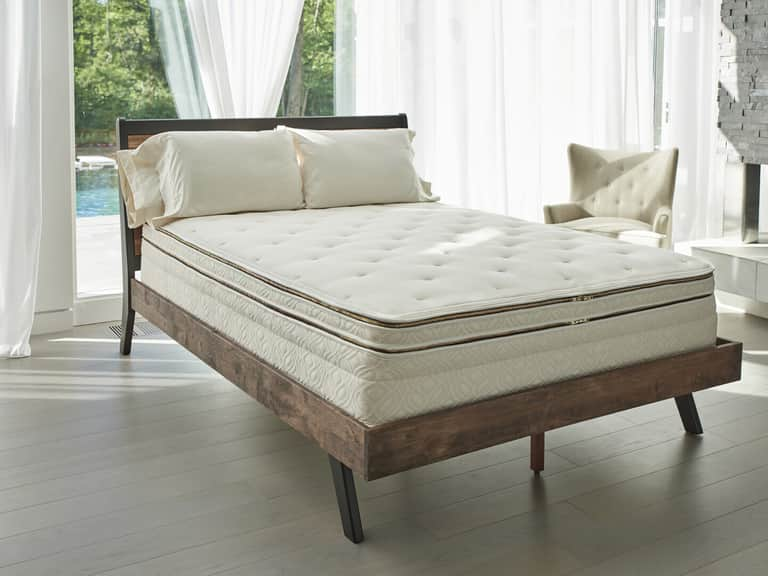
That distinction matters with organic mattresses, which may combine materials such as latex, wool, cotton and, in some designs, coils. Each layer has its own role. A latex core can provide buoyant support; a fiber layer may influence surface comfort and moisture management; a coil unit can contribute to structure and response. An added latex layer becomes one more part of this system, not a reset button.
Think of the topper as a tuning layer. It can modify the first impression and pressure distribution at the surface, while the mattress continues to do much of the deeper supporting work. If the bed is too firm at the shoulders, a suitably soft topper might add give. If the mattress feels too yielding, a firmer topper may create a different surface response, although it cannot strengthen a compromised foundation underneath.
Because comfort is a whole-system effect, evaluating the topper in isolation is difficult. The mattress’s current condition, its existing comfort layers, the sleeper’s body shape and weight, and the bed base can all affect the outcome. A topper that seems moderate on paper may feel substantial over a mattress that already contours deeply.
Why latex feels different from slower-contouring foam
Latex is often described as springy, resilient or buoyant. Under pressure, it compresses and then rebounds relatively promptly when pressure shifts. That response can make it easier to move across the surface than materials that respond more slowly. The effect varies by formulation and construction, but the contrast is useful: latex tends to push back as it compresses, while viscoelastic memory foam is commonly associated with slower, more gradual contouring.
That does not make one material universally better. Some sleepers like the close, gradual hug associated with memory foam. Others prefer the more immediate lift of latex. A person who changes position often may appreciate a surface that recovers quickly, while someone seeking pronounced contouring may find a responsive latex layer less enveloping than expected.
Latex responsiveness also affects the transition between body positions. When a sleeper rolls from side to back, a responsive layer can follow the change without the same delayed recovery some slower foams exhibit. Yet “responsive” is not a synonym for firm. A soft latex topper can compress readily and still rebound quickly; a firmer one may offer more resistance while retaining that elastic character.
Perceived heat is another consideration, but no material guarantees a cool night. Latex construction, topper thickness, cover fabric, room conditions, bedding and individual temperature regulation all play roles. Some latex toppers have perforations or other features intended to encourage airflow, but the overall sleep setup remains the relevant unit of comparison.
Thickness: how much of the mattress feel gets edited?
Thickness influences how strongly a topper can change the surface. A thinner layer usually makes a more restrained adjustment: a subtle shift in cushioning or pressure relief, with more of the mattress’s original character still apparent. A thicker topper can create a more noticeable new comfort layer and may make the original mattress feel less immediate beneath the body.
More thickness is not automatically more comfort. If the topper compresses substantially under a sleeper, it may allow the body to settle farther into the surface. On a mattress that already has a soft or deeply contouring comfort layer, that added compression could feel excessive. A firmer or thinner layer may be a better match for a person seeking a modest change rather than a new, deeper cradle.
On a firm mattress, additional thickness may provide more room for the shoulders and hips to sink in, especially for side sleeping. On a softer mattress, the same amount of latex may create less obvious relief—or may add too much total give. The topper’s firmness and the mattress’s firmness interact; neither tells the full story on its own.
When comparing thicknesses, consider the bed as it currently feels rather than relying only on a label. Ask what sensation needs changing. Is the surface uncomfortably hard at pressure points, or does the body already sink too far? Is the goal a small adjustment, or a clearly different comfort layer? A specific answer helps narrow the choice more effectively than simply seeking the thickest option.
Firmness: a useful description, not a universal measurement
Firmness language is relative. One maker’s “medium” may not match another’s, and what feels firm to one sleeper may feel moderate to another. Body weight, body shape, preferred sleep position, temperature and previous experience with foam can all shape perception.
A softer latex mattress topper may permit more compression near prominent areas such as the shoulders and hips. That can be welcome when a mattress feels too hard at the surface. A firmer topper generally offers more resistance, but whether it makes a bed feel firmer depends on how it behaves alongside the mattress. If the mattress underneath is deeply worn, a firm layer placed on top may not restore consistent support across the bed.
Labels can be helpful for comparison within a single product range, but they are not a substitute for understanding the construction. Look for a clear description of the latex type, thickness, firmness options, cover and care requirements. If a seller provides firmness or indentation-load information, treat it as a technical point of reference, not a direct prediction of comfort for every body.
It is also useful to distinguish support from surface firmness. A surface can feel soft when pressed by the hand yet still provide adequate support for a particular sleeper; a firm surface can still fail to feel comfortable if it creates excessive pressure at shoulders or hips. The body’s position and alignment over a full night matter more than a brief press on the material.
Sleep position changes the question
Sleep position can guide what kind of adjustment to test, though it cannot dictate a single correct firmness. Side sleepers often place more concentrated pressure on the shoulders and hips. If the mattress is too firm at those points, a more yielding topper may help distribute pressure. The goal is not simply to sink as much as possible, but to find a surface that feels comfortable while allowing a settled, neutral position.
Back sleepers may prefer a balanced feel that cushions the body without allowing excessive sinking around the torso or hips. A topper that is too soft for a particular sleeper may alter how the midsection settles. A firmer or thinner layer could preserve more of the mattress’s existing support character, but individual response remains decisive.
Stomach sleepers commonly need to be especially attentive to how far the front of the body sinks into the bed. A thick, soft layer can change the way the hips settle, which may feel uncomfortable to some people. This is not a reason to assume that every stomach sleeper needs the firmest available option; it is a reason to make a cautious, reversible change where possible.
Combination sleepers—those who shift between positions—may value latex’s quick recovery and ease of movement. Still, they may need a compromise between pressure relief and sufficient resistance. A topper chosen for one preferred position can feel different after a turn, so assessment should include the positions used most often, not just the one assumed at bedtime.
Natural, organic and latex are not interchangeable terms
“Latex” identifies a material category, not a complete account of origin or processing. Some latex is made using natural rubber, some is synthetic, and some products blend different forms. A natural latex mattress topper may be described as using rubber-tree-derived material, but the percentage and other components should be checked in the product details.
“Organic” is a further claim. It may refer to a particular input, such as latex, or to a certified component in a larger product. The cover, thread, adhesives and other parts may have separate materials and standards. Certification names are most useful when the reader can verify what is certified, by whom, and whether the claim applies to the latex itself, the cover, the finished topper, or only part of it.
These distinctions matter to readers who chose an organic mattress for material transparency or environmental priorities. A topper can add a new material layer to that sleep system, so its composition deserves the same scrutiny as the mattress. Ask whether the description identifies the latex type, whether natural and synthetic content is disclosed, what the cover contains, and what certification documentation is available.
Natural origin does not automatically establish that a product is free from every substance a consumer may wish to avoid, nor does an organic claim alone describe comfort, durability or sourcing across the whole product. Clear, specific material information is more useful than broad assurances. The phrase “organic latex mattress topper” should prompt questions about scope, not end them.
The cover and the fit can change the experience
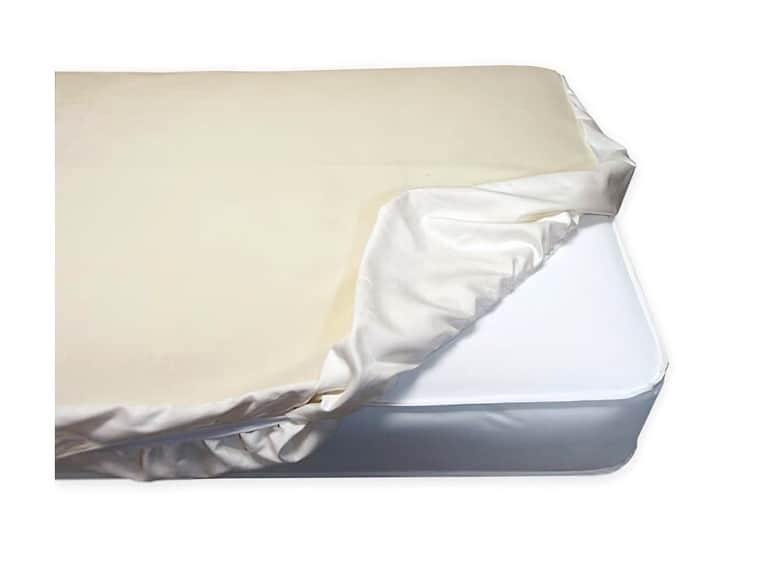
The cover is not merely packaging. It is the first surface the sleeper encounters and can influence texture, stretch and airflow. A cover that is tightly woven or quilted may make the topper feel less direct; a stretchier cover may allow the latex to respond more freely. Fabric and construction also affect how the topper sits beneath the fitted sheet.
Fit is practical, but it has consequences for comfort. Check that the topper’s dimensions match the mattress and that the combined depth still works with the fitted sheets. A loose or shifting layer can bunch, create unevenness or interrupt the sense of a continuous surface. Some designs rely on the fitted sheet to hold the topper in place; others may include straps or another attachment approach. The product’s instructions should clarify what is intended.
Airflow is often discussed in relation to latex, but the cover and bedding can influence how that property is experienced. A thick protector, tightly fitted sheet, heavy comforter or warm bedroom may affect heat retention even when the topper itself is breathable. Evaluate the complete bed rather than assuming that one material feature determines temperature.
Care guidance also matters. Some covers are removable, while others are not intended to be taken off or washed. Latex itself should not be treated as if it were ordinary machine-washable fabric. Follow the maker’s directions for cleaning, drying and exposure to sunlight or heat, and use a suitable mattress protector if protection from spills is a priority.
A practical way to decide whether a topper fits the problem
Before adding a layer, identify what feels wrong and when it happens. A mattress that feels too hard at the shoulders calls for a different experiment from one that allows the hips to sink too far. If discomfort is tied to an uneven or sagging area, a topper may soften the surface without correcting the underlying problem.
Next, review the mattress itself. Confirm that it sits on an appropriate, stable base and that the mattress is in reasonable condition. Check care instructions and warranty terms before adding an accessory; some manufacturers specify which foundations or components are compatible. A topper can change the feel, but it does not necessarily preserve a warranty or compensate for a structural issue.
Then compare the topper’s thickness and firmness with the mattress’s current feel. A modest surface change may call for a thinner layer; a more substantial comfort adjustment may call for greater thickness, provided the mattress beneath is still supportive. For a latex mattress topper, consider whether you want buoyant cushioning or a noticeably firmer surface, and remember that latex can feel springier than slow-response memory foam even when the two products are described with similar firmness labels.
- Describe the problem: Is the bed too firm, too soft, too warm, or simply not comfortable in a particular position?
- Consider the mattress beneath: Note its existing materials, age, condition and degree of contouring.
- Match thickness to the scale of change: A subtle adjustment and a pronounced new comfort layer are different goals.
- Check the material details: Look for latex composition, cover fabric, certification scope and care guidance.
- Review trial and return terms: A topper’s feel is personal, and a short first impression may not answer every question.
If a product offers a trial period, read its conditions carefully before purchase. Check the allowed testing period, return process, required packaging and any fees. These details are part of the practical value of a reversible comfort adjustment. They are especially relevant when firmness language cannot fully predict how a topper will feel at home.
What a topper can—and cannot—promise
A latex topper can add a layer of cushioning, shift the surface firmness, and change how quickly the sleep surface responds to movement. For some people, that adjustment is enough to make an otherwise suitable organic mattress feel more comfortable. It may also offer a way to explore a different surface sensation without replacing the entire mattress.
It cannot guarantee pain relief, correct every posture concern, or make one firmness suitable for all sleepers. Claims about health outcomes deserve particular care: comfort and support are personal, and persistent pain can have causes that bedding cannot resolve. People with ongoing or severe discomfort should seek guidance from an appropriately qualified health professional rather than treating a topper as a medical solution.
Nor does a new topper necessarily extend a mattress’s useful life. If the bed has lost support, developed substantial sagging, or become uneven, a topper may disguise the surface for a time without addressing the condition below. The distinction between a comfort mismatch and a worn-out mattress is central to choosing wisely.
The strongest reason to consider an organic latex mattress topper is not that it is a universal upgrade. It is that it gives a sleeper a distinct material response and an additional way to tune a sleep surface. Whether that response helps depends on careful matching: thickness to desired change, firmness to the mattress and sleeper, and construction to the values and practical needs behind the choice.
The bottom line
A latex topper can add a springy, resilient layer to an organic mattress, softening or firming the surface according to its construction and the bed beneath it. Thickness determines how pronounced the adjustment may be; firmness influences resistance and compression; sleep position shapes where cushioning may be most noticeable. The cover, fit and bedding complete the picture.
For readers weighing a natural latex mattress topper, the material name is only the beginning. Look for specific information about natural and synthetic content, certification scope, cover construction and care. Then assess the mattress as a whole. A well-chosen topper can refine a good sleep surface. It cannot make every mattress—or every night—feel the same.
Frequently asked questions
Will a latex topper make an organic mattress softer?
A softer topper may add cushioning, but the result depends on its thickness and firmness as well as the mattress’s existing comfort layers. A firm topper may instead make the surface feel more resistant. The mattress beneath remains part of the overall feel.
Does latex feel like memory foam?
Not usually. Latex is often more buoyant and quicker to rebound, while memory foam is commonly associated with slower contouring. The exact sensation varies by formulation, construction and firmness.
Is every natural latex mattress topper organic?
No. “Natural” and “organic” refer to different claims. Check the stated latex composition and the scope of any certification rather than assuming that a natural-material description means the complete topper is certified organic.
Can a topper fix a sagging mattress?
A topper may change the surface feel, but it does not restore a worn support core or level an uneven mattress. If the mattress is visibly sagging or no longer supporting the body consistently, evaluate the mattress and foundation rather than relying on an added comfort layer.